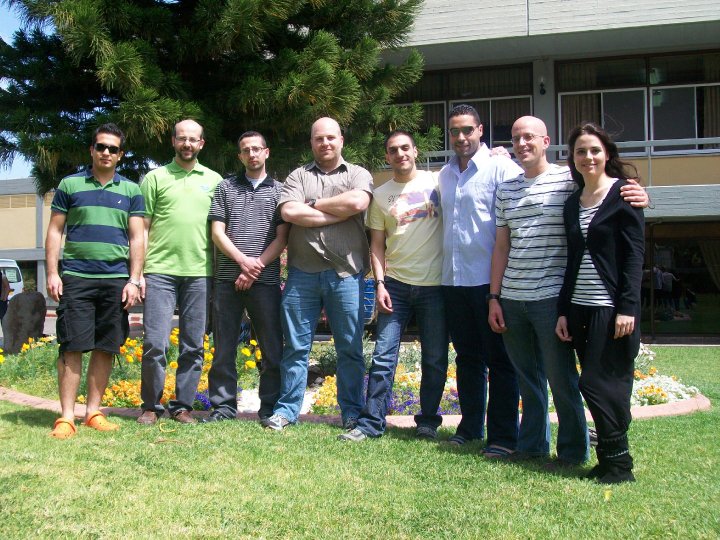
Prof. Rami Aqeilan
Role of Tumor Suppressor Gene Products of Common Fragile Sites in Human Diseases
Common fragile sites (CFSs) are large chromosomal regions identified by conventional cytogenetics as sequences prone to breakage in cells subjected to replication stress. The interest in CFSs stems from their key role in DNA damage, resulting in chromosomal rearrangements. The instability of CFSs was correlated with genome instability in precancerous lesions and during tumor progression. Two opposing views dominate the discussion regarding the role of CFSs. One school of thought suggested that genomic instability during cancer progression causes collateral damage to genes residing within CFSs, such as WWOX and FHIT. These genes are proposed to be unselected ‘‘passenger’’ mutations. The counter argument is that deletions and other genomic alterations in CFSs occur early in cancer development. Cancer cells with deletions in genes that span CFSs are then selectively expanded due to loss of tumor suppressor functions such as protection of genome stability, coordination of cell cycle or apoptosis.
Recent observations from our lab clearly suggest that gene products of CFSs play driver roles in cancer transformation. Furthermore, accumulating evidence links some of these products with metabolic diseases and neuropathy. Investigating the role of these gene products in human diseases is a major interest of our lab work. The ultimate goal of our research is hence to discover the genes and to elucidate the pathways that represent targets for the development of rational, specific and effective therapeutic approaches.

Galit Eisenberg, PhD.
Principal investigator and lab manager
Galit Eisenberg, PhD.
Principal investigator and lab manager
Galit Eisenberg, PhD.
Principal investigator and lab manager
Galit Eisenberg, PhD.
Principal investigator and lab manager
Galit Eisenberg, PhD.
Principal investigator and lab manager
Galit Eisenberg, PhD.
Principal investigator and lab manager
Galit Eisenberg, PhD.
Principal investigator and lab manager
- Mapping the breakome of cancer cells
- Elucidating the role of gene products of CFSs in driving carcinogenesis
- Dissecting the role of various oncogenes in inducing replication stress
- Studying the role of the WWOX gene in cellular metabolism
- Determining the role of WWOX in epilepsy and ataxia
Selected Publications
Aqeilan RI, Trapasso F, Hussain S, Costinean S, Marshall D, Pekarsky Y, et al. Targeted deletion of Wwox reveals a tumor suppressor function. Proc Natl Acad Sci U S A 2007, 104(10): 3949-3954.
Aqeilan RI, Hassan MQ, de Bruin A, Hagan JP, Volinia S, Palumbo T, et al. The WWOX tumor suppressor is essential for postnatal survival and normal bone metabolism. J Biol Chem 2008, 283(31): 21629-21639.
Pichiorri F, Suh SS, Ladetto M, Kuehl M, Palumbo T, Drandi D, et al. MicroRNAs regulate critical genes associated with multiple myeloma pathogenesis. Proc Natl Acad Sci U S A 2008, 105(35): 12885-12890.
Aqeilan RI, Calin GA, Croce CM. miR-15a and miR-16-1 in cancer: discovery, function and future perspectives. Cell Death Differ 2010, 17(2): 215-220.
Kurek KC, Del Mare S, Salah Z, Abdeen S, Sadiq H, Lee SH, et al. Frequent attenuation of the WWOX tumor suppressor in osteosarcoma is associated with increased tumorigenicity and aberrant RUNX2 expression. Cancer Res 2010, 70(13): 5577-5586.
Pichiorri F, Suh SS, Rocci A, De Luca L, Taccioli C, Santhanam R, et al. Downregulation of p53-inducible microRNAs 192, 194, and 215 impairs the p53/MDM2 autoregulatory loop in multiple myeloma development. Cancer Cell 2010, 18(4): 367-381.
Abdeen SK, Salah Z, Maly B, Smith Y, Tufail R, Abu-Odeh M, et al. Wwox inactivation enhances mammary tumorigenesis. Oncogene 2011, 30(36): 3900-3906.
Del Mare S, Kurek KC, Stein GS, Lian JB, Aqeilan RI. Role of the WWOX tumor suppressor gene in bone homeostasis and the pathogenesis of osteosarcoma. Am J Cancer Res 2011, 1(5): 585-594.
Jones KB, Salah Z, Del Mare S, Galasso M, Gaudio E, Nuovo GJ, et al. miRNA signatures associate with pathogenesis and progression of osteosarcoma. Cancer Res 2012, 72(7): 1865-1877.
Abu-Odeh M, Bar-Mag T, Huang H, Kim T, Salah Z, Abdeen SK, et al. Characterizing WW domain interactions of tumor suppressor WWOX reveals its association with multiprotein networks. J Biol Chem 2014, 289(13): 8865-8880.
Abu-Odeh M, Salah Z, Herbel C, Hofmann TG, Aqeilan RI. WWOX, the common fragile site FRA16D gene product, regulates ATM activation and the DNA damage response. Proc Natl Acad Sci U S A 2014, 111(44): E4716-4725.
Abu-Remaileh M, Aqeilan RI. Tumor suppressor WWOX regulates glucose metabolism via HIF1alpha modulation. Cell Death Differ 2014, 21(11): 1805-1814.
Suh SS, Yoo JY, Cui R, Kaur B, Huebner K, Lee TK, et al. FHIT suppresses epithelial-mesenchymal transition (EMT) and metastasis in lung cancer through modulation of microRNAs. PLoS Genet 2014, 10(10): e1004652.
Abu-Remaileh M, Joy-Dodson E, Schueler-Furman O, Aqeilan RI. Pleiotropic Functions of Tumor Suppressor WWOX in Normal and Cancer Cells. J Biol Chem 2015, 290(52): 30728-30735.
Del Mare S, Husanie H, Iancu O, Abu-Odeh M, Evangelou K, Lovat F, et al. WWOX and p53 Dysregulation Synergize to Drive the Development of Osteosarcoma. Cancer Res 2016, 76(20): 6107-6117.
Hazan I, Hofmann TG, Aqeilan RI. Tumor Suppressor Genes within Common Fragile Sites Are Active Players in the DNA Damage Response. PLoS Genet 2016, 12(12): e1006436.
Abu-Remaileh M, Khalaileh A, Pikarsky E, Aqeilan RI. WWOX controls hepatic HIF1alpha to suppress hepatocyte proliferation and neoplasia. Cell Death Dis 2018, 9(5): 511.
Abu-Remaileh M, Abu-Remaileh M, Akkawi R, Knani I, Udi S, Pacold ME, Tam J, Aqeilan RI. WWOX somatic ablation in skeletal muscles alters glucose metabolism. Mol Metab. 2019 Apr;22:132-140.
Khawaled S, Suh SS, Abdeen SK, Monin J, Distefano R, Nigita G, Croce CM, Aqeilan RI. WWOX Inhibits Metastasis of Triple-Negative Breast Cancer Cells via
Modulation of miRNAs. Cancer Res. 2019 Apr 15;79(8):1784-1798.
Commentary by Sharma, P.: Quest for Tangible Biomarkers for Triple-Negative Breast Cancer. [Cancer Res. 2019]
Hazan I, Monin J, Bouwman BAM, Crosetto N, Aqeilan RI. Activation of Oncogenic Super-Enhancers Is Coupled with DNA Repair by RAD51. Cell Rep. 2019 Oct 15;29(3):560-572.e4.
Khawaled S, Nigita G, Distefano R, Oster S, Suh SS, Smith Y, Khalaileh A, Peng Y, Croce CM, Geiger T, Seewaldt VL, Aqeilan RI. Pleiotropic tumor suppressor functions of WWOX antagonize metastasis. Signal Transduct Target Ther. 2020 Apr 17;5(1):43.
Repudi S, Steinberg DJ, Elazar N, Breton VL, Aquilino MS, Saleem A, Abu-Swai S, Vainshtein A, Eshed-Eisenbach Y, Vijayaragavan B, Behar O, Hanna JJ, Peles E, Carlen PL, Aqeilan RI. Neuronal deletion of Wwox, associated with WOREE syndrome, causes epilepsy and myelin defects. Brain. 2021 Nov 29;144(10):3061-3077.
Steinberg DJ, Repudi S, Saleem A, Kustanovich I, Viukov S, Abudiab B, Banne E, Mahajnah M, Hanna JH, Stern S, Carlen PL, Aqeilan RI. Modeling genetic epileptic encephalopathies using brain organoids. EMBO Mol Med. 2021 Aug 9;13(8):e13610.
Repudi S, Kustanovich I, Abu-Swai S, Stern S, Aqeilan RI. Neonatal neuronal WWOX gene therapy rescues Wwox null phenotypes. EMBO Mol Med. 2021 Dec 7;13(12):e14599.
Husanie H, Abu-Remaileh M, Maroun K, Abu-Tair L, Safadi H, Atlan K, Golan T, Aqeilan RI. Loss of tumor suppressor WWOX accelerates pancreatic cancer development through promotion of TGFβ/BMP2 signaling. Cell Death Dis. 2022 Dec 27;13(12):1074.
Akkawi R, Hidmi O, Haj-Yahia A, Monin J, Diment J, Drier Y, Stein GS, Aqeilan RI. WWOX promotes osteosarcoma development via upregulation of Myc. Cell Death Dis. 2024 Jan 5;15(1):13.
Hidmi O, Oster S, Monin J, Aqeilan RI. TOP1 and R-loops facilitate transcriptional DSBs at hypertranscribed cancer driver genes. iScience. 2024 Feb 1;27(3):109082.
- Dr. Gary Stein, Director, Vermont Cancer Center, USA
- Dr. Jane Lian, Vermont Cancer Center, USA
- Dr. Victoria Seewaldt, City of Hope, USA
- Dr. Uri Ben-David, Broad Institute, USA
- Dr. Thomas Hofmann, University Medicine Mainz, Germany
- Dr. Peter Carlen, University of Toronto, Canada